

Pedro Pizarro & James Quincey
The real connection, complete biographies, careers, 2026 leadership updates, compensation, and what their paths reveal about running two very different industries.
What connects Pedro Pizarro and James Quincey?
Pedro Pizarro and James Quincey are prominent business executives from different industries, and they have a documented connection through a shared leadership forum. On September 17, 2025, Yale School of Management’s CEO Caucus program listed both men among the opening-remarks participants for a discussion titled Rewriting the Trade Rules to Win the Global AI and Tech Race. Pizarro was identified as CEO of Edison International; Quincey was then chair and CEO of The Coca-Cola Company. That is a real, dated professional overlap—rather than an inferred connection based only on their names appearing together online. Yale agenda, page 3 ↗
The agenda establishes their inclusion in the same program and session listing. It does not establish a personal friendship, family relationship, joint investment, private meeting, or business partnership. Their primary companies have different business models. Edison International is associated with electricity infrastructure and utility service through Southern California Edison. Coca-Cola manages beverage brands and a worldwide network of bottling, distribution and retail partners. The executives’ shared participation in a leadership discussion is meaningful, but its limits should be respected.
There is another important update for anyone searching this comparison in 2026. Pizarro remains President and Chief Executive Officer of Edison International. Quincey, however, is no longer Coca-Cola’s chief executive: he became Executive Chairman on March 31, 2026, when Henrique Braun became CEO. Any fresh biography that calls Quincey the current Coca-Cola CEO without that qualification is out of date. Edison leadership ↗ · Coca-Cola leadership ↗
Pedro Pizarro vs. James Quincey: quick facts
The following comparison uses official leadership biographies, company announcements, and shareholder disclosures. Ages are based on information reported in corporate filings during 2026, rather than unverified birthday websites. Exact birth dates and physical heights are not central to either executive’s public corporate biography and should not be guessed.
| Category | Pedro J. Pizarro | James Quincey |
|---|---|---|
| Current role (Oct. 2026) | President & CEO, Edison International | Executive Chairman, The Coca-Cola Company |
| Core business | Electric utilities, grid infrastructure, energy transition | Global beverage brands, consumer products, distribution system |
| Joined company | 1999 | 1996 |
| CEO appointment | October 2016 | May 2017 |
| 2026 leadership status | Continues as CEO | Stepped down as CEO on March 31 |
| Education | Harvard chemistry degree; Caltech PhD in chemistry | Electronic engineering degree, University of Liverpool |
| Consulting background | McKinsey & Company | The Kalchas Group |
| Additional board work | 3M and industry organizations | Pfizer |
| 2025 total reported compensation | $16,544,559 | $31,208,165 |
Sources: Edison director profile ↗; Coca-Cola board biography ↗; Edison 2026 proxy index ↗; Coca-Cola 2026 proxy ↗. Compensation is the SEC-style total in the 2025 summary compensation tables—not base salary or a statement of personal net worth.
Who is Pedro J. Pizarro? Biography, education and early career
Scientific training, management consulting and decades of utility experience shaped the career of the Edison International executive. His professional record emphasizes electricity infrastructure, safety, resilience, long-term investment and regulatory coordination.
Academic foundation: Harvard and Caltech
Pedro J. Pizarro earned an undergraduate degree in chemistry at Harvard University and a PhD in chemistry at the California Institute of Technology. Edison International’s official biography also says he held National Science Foundation and Department of Defense graduate fellowships. These details explain the technical foundation of a career that later shifted from laboratory science toward complex commercial decisions. Energy infrastructure is not simply a financial market: technology, materials, physical systems and public policy shape virtually every major choice made by a large electric utility.
His academic background does not mean every decision in his career was scientific research. Rather, it gave him the training to work with evidence, technical uncertainties and long planning horizons. Utilities must make decisions about investments that can remain in service for decades. A comparison between a science-trained energy executive and an engineering-trained beverage executive is more useful when it explains this context instead of assigning simplistic labels such as ‘genius’ or ‘visionary’ without proof.
Management consulting before Edison
Before joining Edison International, Pizarro worked at McKinsey & Company in Los Angeles as a senior engagement manager. According to Edison, his work covered clients in energy, technology, engineering services and banking. His assignments involved corporate strategy, mergers and acquisitions, operations and organizational questions. Those are skills that later became relevant to managing a utility parent organization with major physical assets, regulatory obligations and multiple business units.
Consulting experience can create familiarity with evaluating options and balancing stakeholders, but it is not a guarantee of successful executive decisions. What matters in Pizarro’s biography is the sequence: advanced scientific education, strategic consulting, then sustained operational responsibility inside the electric-power industry. Rather than moving through a succession of unrelated top jobs, he rose through the company that he would eventually lead. Official Edison biography ↗
Joining Edison International in 1999
Pizarro joined Edison International in 1999, then moved to Southern California Edison in 2001. Over the following years, he held positions tied to strategy, power procurement, generation, transmission, distribution and technology. This breadth is notable because customers experience electricity as a simple service, while executives must oversee a complicated structure involving power supply, transmission networks, grid reliability, billing, labor, safety and regulation. Each component has different economic and technical constraints.
Early leadership work at a utility can require learning how California’s energy markets and oversight institutions operate. Electricity is an essential service, and utility projects are often judged simultaneously on reliability, customer affordability, environmental impacts and returns to investors. Unlike consumer brands, whose customers can choose among products in a store, an electric utility also has an obligation to provide safe, reliable service within a regulated framework. This public-service dimension helps distinguish Pizarro’s career from Quincey’s.
Pedro Pizarro’s career timeline and rise to CEO
Pizarro became president of Edison Mission Energy in 2011, before the sale of that business’s principal assets to NRG Energy in April 2014. Later in 2014, he was appointed president of Southern California Edison. In May 2016 he became president of Edison International, and in October 2016 he became chief executive officer. This progression links financial and strategic work with direct utility operations and parent-company leadership. Edison International ↗
Joins Edison International, beginning a long internal career.
Moves to Southern California Edison and continues through strategy and energy-management roles.
Leads Edison Mission Energy before its principal assets are sold.
Serves as president of Southern California Edison, the regulated utility.
Becomes president, then CEO, of Edison International.
Serves as a director of 3M; continues public-utility and industry involvement.
Remains Edison International CEO; receives SEPA’s Excellence in Leadership recognition.
Being the CEO of Edison International is not exactly the same job as running one power plant or managing one electricity distribution district. The parent organization sets enterprise-wide strategy, oversees financial priorities and has responsibilities to investors and other stakeholders. Southern California Edison, by contrast, is the major operating utility through which customers receive electrical service. Understanding this distinction helps readers interpret news about SCE, Edison International and the individuals in leadership positions.

Outside boards and industry involvement
Edison identifies Pizarro as a member of the 3M board and lists leadership and service roles associated with the Edison Electric Institute and the Electricity Subsector Coordinating Council. His former work includes positions with Caltech, the Electric Power Research Institute and other advisory organizations. His role at 3M illustrates that an energy executive’s knowledge can also be relevant to science, manufacturing, technology and sustainability oversight outside the electric utility sector.
These positions are worth including because they are documented rather than inferred. They do not establish a hidden relationship with Coca-Cola or James Quincey; corporate board work must be reported accurately by company and date. Overlapping interests in global infrastructure, industrial policy, governance or technology should not be confused with personal investment connections or private collaborations. Pizarro board record ↗
The main issues confronting Edison International in 2026
Grid investment, electrification and reliability
Edison’s management operates in an environment shaped by the growing importance of electricity in transportation, buildings, digital infrastructure and manufacturing. Modernizing power networks involves significant capital investment, inspection programs, system planning, equipment replacement and coordination with regulators. The business case can be complicated: the grid must serve current customers reliably while accommodating demand patterns that may change significantly in the coming decades.
One of the most important ideas in Pizarro’s public leadership record is that reliability, resilience and affordability are related but not identical goals. Strengthening electrical infrastructure can reduce certain risks, yet the costs of investment must be recovered somehow. Consumers, public officials and investors may disagree on the best pace and financing of upgrades. An accurate executive biography should therefore describe strategic priorities without claiming that any one person has single-handedly solved California’s energy problems.

Wildfire risk and the Eaton Fire investigation
Wildfires represent one of the most consequential issues for utilities in parts of California. Equipment, vegetation, weather, terrain, engineering practices and emergency response can all become important to understanding a specific fire. This is a subject on which an article must be careful about dates, findings and the difference between an investigation’s cause determination and the ultimate resolution of legal claims.
On August 4, 2026, the Los Angeles County Fire Department released an investigation, conducted with CAL FIRE, concluding that electrical arcing events on an out-of-service Southern California Edison transmission tower caused the Eaton Fire that began on January 7, 2025. The county said the disaster killed 19 people and destroyed or damaged more than 9,000 homes and businesses. These are serious findings, and they belong in a comprehensive 2026 account of Edison International. L.A. County’s official findings ↗
At the same time, a cause determination is not identical to a final court judgment allocating financial or legal liability. Litigation, insurance questions and recovery efforts are distinct processes, and their status can change. It would be inaccurate to treat an executive’s corporate position as proof of personal legal culpability. Readers deserve both the official fire-cause finding and clear language about what it does—and does not—decide. Any future updates to this article should revisit the latest court and regulator records rather than repeat a 2026 snapshot indefinitely.
Recognition from the energy sector
In 2026, the Smart Electric Power Alliance named Pizarro the winner of its Excellence in Leadership Power Player Award. The award announcement cited grid resilience, electrification, climate adaptation and collaboration. It is appropriate to present this as recognition by the awarding organization, not as an independently measured conclusion that all of Edison’s outcomes were successful. SEPA 2026 announcement ↗
That distinction is not just a writing technicality. Corporate biographies often highlight achievements and awards, while independent reporting often focuses on operational failures or disputes. A useful article includes both, with evidence and context. Doing so also provides a richer answer to searchers asking what Pizarro has accomplished, what challenges the company faces and why his role matters beyond an isolated salary or net-worth search.
Who is James Quincey? Biography, education and early career
A British business executive with an engineering education, international consulting experience and a 30-year Coca-Cola career. His rise took him through Latin America and Europe into global leadership—and a move to Executive Chairman in 2026.

Early background and engineering education
James Quincey is a British-born corporate leader who earned a bachelor’s degree in electronic engineering from the University of Liverpool. The company’s official profile identifies his education and professional career, but it does not publish a comprehensive personal-life history. Responsible biographies should distinguish what the public record confirms from unsupported claims about childhood, exact physical measurements or private family matters.
Electronic engineering is an interesting academic foundation for an executive later associated with beverage brands. A modern beverage company relies on industrial systems, manufacturing, distribution networks, analytics and marketing technology as well as product design. Engineering training may provide useful habits of structured problem-solving, but a degree alone does not explain commercial success. Quincey’s later organizational roles are the stronger evidence for how he acquired international operating experience.
Consulting at the Kalchas Group
Before joining Coca-Cola, Quincey worked in strategy consulting at The Kalchas Group, which Coca-Cola describes as a spinoff of Bain & Company and McKinsey. His earlier experience was distinct from Pizarro’s role at McKinsey itself. The two men therefore share a consulting background without having a verified history of working together at the same consulting firm.
This similarity is meaningful in a comparison because both executives went from strategy-oriented work into long operating careers. Yet their trajectories diverged sharply. Quincey’s business eventually required coordinating products, customers, retailers and bottling relationships across many markets. Pizarro’s required managing infrastructure, regulated service and energy risks. Looking at how those responsibilities differ provides more substance than assuming an association because both once worked in consulting.
Joining Coca-Cola in 1996
Quincey joined Coca-Cola in Atlanta in 1996 as director of learning strategy for the Latin America Group. He subsequently worked in roles throughout Latin America, was named president of the South Latin division in 2003, and served as president of the Mexico division beginning in 2005. Working in these markets would have exposed him to brand distribution, retail networks, pricing, local consumer preferences and the coordination between the central company and its bottling partners.
The company’s leadership profiles do not suggest that he moved straight from university to the chief executive’s office. Instead, his career contains decades of geographic and functional assignments. This matters because Coca-Cola operates through a global business system rather than a single set of company-owned shops. Growth can depend on the availability, affordability and appeal of drinks in places with very different retail formats and purchasing habits. Official Coca-Cola profile ↗
James Quincey’s rise from regional roles to Coca-Cola CEO
From 2008 to 2012, Quincey led Coca-Cola’s Northwest Europe and Nordics business unit. He became president of the Europe Group in 2013, followed by a promotion to president and chief operating officer in 2015. In May 2017, he succeeded to the role of chief executive officer. Coca-Cola’s board elected him chairman in 2019, creating a period in which he held both top leadership titles. Company biography ↗
Joins Coca-Cola as a director of learning strategy in its Latin America Group.
Leads South Latin and Mexico divisions.
Leads Northwest Europe and Nordics, then the wider Europe Group.
Serves as president and chief operating officer.
Becomes chief executive officer of The Coca-Cola Company.
Becomes chairman of the board.
Transitions to Executive Chairman as Henrique Braun becomes CEO.

Portfolio transformation and new beverage categories
During Quincey’s tenure as CEO, Coca-Cola increasingly described itself as a ‘total beverage company,’ emphasizing a portfolio that extends beyond its flagship sparkling soft drinks. The company expanded its range across waters, juices, sports drinks, coffee and other categories. Its official 2025 succession announcement highlighted the addition of more than ten billion-dollar brands under his leadership, as well as changes to strategy, marketing and operating structure. That is a company-reported accomplishment and should be attributed accordingly. Coca-Cola succession announcement ↗
Acquisitions and investments associated with the period include Costa coffee, fairlife and BODYARMOR. It is useful to distinguish acquisition from internally created products and to remember that a company’s performance is the result of many teams and decisions, not a single CEO acting alone. A credible biography explains the direction of the portfolio without assigning every outcome exclusively to one executive.
Quincey also led Coca-Cola through the disruption of the COVID-19 pandemic, when restaurant, hospitality and on-premise beverage demand changed abruptly. Rebuilding channels, managing supply relationships, considering digital marketing and adjusting customer strategies all formed part of the operating context. This experience helps explain the breadth of responsibilities attached to the CEO role at a global consumer-products corporation.

Why Coca-Cola’s business is different from a utility
Much of Coca-Cola’s value proposition rests on products that people choose to buy. Its partners place beverages in stores, restaurants, venues and other retail settings. Consumer tastes and marketing campaigns can alter demand in ways that a regulated utility generally does not experience. However, Coca-Cola faces its own forms of scrutiny involving health, packaging, water stewardship, environmental impact and advertising practices.
The contrast is useful rather than competitive. An energy company and a beverage company both manage supply chains and long-term capital, but the central risks are different. Coca-Cola must maintain brand relevance and a distribution ecosystem across many countries. Edison must operate safely within technical and regulatory requirements while investing in infrastructure whose consequences can affect entire communities. These differences frame any serious comparison of the two leaders.
Why James Quincey is Executive Chairman—not Coca-Cola CEO—in 2026
Coca-Cola announced the succession plan in December 2025, naming Henrique Braun as the next CEO effective March 31, 2026. On that date, Quincey transitioned from chief executive to Executive Chairman. The company now lists Braun as chief executive officer and Quincey as Executive Chairman in its official leadership directory. These details are easy to verify, and they are particularly important because older profiles and archived company documents still identify Quincey as CEO. Current CEO profile ↗ · Official transition announcement ↗
CEO and Executive Chairman are different positions. A chief executive is principally accountable for company-wide execution and operating leadership, while a chair works through the board’s governance structures. The exact division of responsibilities varies by company. Coca-Cola’s announcement said Quincey would remain active as Executive Chairman while Braun assumed the chief executive’s role. It would therefore be wrong to report that Quincey retired entirely from the company in March 2026.
The transition also affects compensation comparisons. The 2025 compensation figure in corporate filings relates to Quincey’s time as chairman and CEO; it should not be treated as his guaranteed annual compensation as Executive Chairman in 2026. Company-reported stock award values, incentive payouts, pension accounting and other items can change considerably. The date attached to any compensation figure is as important as the amount.
Outside Coca-Cola, the company lists Quincey as a director of Pfizer. This establishes a cross-industry governance responsibility but does not connect him to Pizarro’s own 3M board work. Separately, the Special Olympics lists Quincey among its board members, illustrating the range of corporate and nonprofit organizations associated with his public biography. Current corporate biography ↗ · Special Olympics ↗
Leadership comparison: energy infrastructure versus consumer brands
Both leaders spent decades inside their eventual companies before reaching the highest level, but the operating environments are not interchangeable. Edison International’s obligations involve an essential service: keeping electricity available and safe, with investments in grids that must withstand changing demands and hazards. Coca-Cola’s operations depend on consumer choice, brand equity, product availability and coordination across numerous geographic markets. Neither business can be summarized adequately by calling it simply ‘a large corporation.’
Pedro Pizarro
Decision lens: safety, reliability, affordability, infrastructure financing, regulatory compliance, risk and electrification.
Time horizon: grid assets and planning measured in years or decades, with large engineering commitments.
Key stakeholders: customers, communities, employees, investors, regulators and emergency-response institutions.
James Quincey
Decision lens: consumer demand, category mix, distribution, product portfolio, brand strength and global operations.
Time horizon: brand development and capital investment, alongside near-term consumer and retail changes.
Key stakeholders: consumers, bottlers, retailers, workers, investors, governments and suppliers.
Different responsibilities also require different metrics. Utility analysis often considers service reliability, system resilience, wildfire mitigation, infrastructure spending and the affordability of electricity bills. Beverage analysis may look at volume, price and mix, market share, distribution, profitability and product innovation. A sensational ‘which CEO is better?’ ranking would erase these differences and risk comparing unrelated measures as if they were equivalent.
What the two paths do share is a combination of technical or analytical education, early consulting and long tenures within a major company. These parallels are specific and supported by the companies’ biographies. They provide a useful explanation for why readers may compare the men, although they still do not establish any direct personal connection. In an evidence-led article, this kind of qualified comparison is more informative than unsourced anecdotes about management personalities.
Pedro Pizarro and James Quincey salary, compensation and net worth in 2026
Financial searches are common for high-profile CEOs, but three concepts are often confused: salary, reported total executive compensation and personal net worth. A salary is usually the fixed cash component of employment pay. Total compensation in a corporate proxy may include stock and option awards, annual incentives, retirement-related accounting and other benefits. Net worth is a person’s privately held assets minus liabilities. No one of these figures can automatically substitute for another.
Edison International’s 2026 proxy statement reported $16,544,559 of total 2025 compensation for Pedro Pizarro. Coca-Cola’s 2026 proxy reported $31,208,165 of total 2025 compensation for James Quincey, including a base salary of $1,675,000. These totals are historical disclosure figures. They are not proof that the executives received those totals in cash or that the sums equal their personal fortunes. Edison proxy statements ↗ · Coca-Cola 2026 proxy ↗
Corporate disclosures are stronger sources than websites that publish round-number celebrity wealth estimates without methodology. Such estimates may omit private investments, debts, real-estate holdings, tax obligations, family arrangements and changes in the market value of securities. Even public share-ownership disclosures do not reveal a complete balance sheet. For that reason, this article does not describe a precise 2026 personal net worth for either executive as a verified fact.
The fair comparison is between like-for-like items: both figures above are 2025 totals from company proxy reporting. It is also reasonable to describe the range of components included in each filing, provided the exact company reporting rules are respected. Comparing Quincey’s 2025 total with an unsourced Pizarro monthly ‘salary’ would be misleading. And because Quincey changed roles in March 2026, readers should not presume his later compensation remained identical.
Questions about executive pay can lead to legitimate discussions about governance, performance, investor expectations and the experiences of workers and customers. Those conversations are best served by dated primary documents and clearly explained figures. A bigger number is not by itself evidence of better performance or greater private wealth. The reporting year, award structure and the duties of each executive all matter.
Age, family, marriages, height and private-life claims
Biographical searches often include age, spouse, children, parents, height and birthplace. Those details are sometimes important for public figures, but an article should never fill empty fields with guesses just to make a facts table look complete. Corporate disclosure documents offer more reliable information about ages and professional affiliations than low-quality biography aggregators, while personal and family details may be intentionally absent from official profiles.
In 2026 corporate materials, James Quincey is listed as age 61, while Pizarro is described as age 60 in relevant company filings. Those are dated ages, not a license to fabricate exact birth dates. Official profiles identify Quincey as a native of Britain; they identify Pizarro’s education and professional background in the United States. Neither current official company biography is intended to be a comprehensive public registry of spouses, children or private family relationships.
Is Pedro Pizarro related to James Quincey? No documented family link has been established in the official biographies and public sources reviewed here. The Yale event establishes a professional forum connection, not a family-tree connection. It would be particularly misleading to invent a relationship because of common search phrasing such as ‘Pedro Pizarro and James Quincey.’ A combined keyword tells us that people search two names together, not why they do so.
Height, detailed childhood anecdotes and sensational net-worth figures are omitted from the fact table where reliable documentation is unavailable. This is a deliberate choice, not an incomplete biography. Accurate information is more valuable than false precision, and it helps readers understand what is documented and what remains private.
Which Pedro Pizarro is this? An important identity clarification
Search engines can return several people with the name Pedro Pizarro. In this article, Pedro J. Pizarro means the modern Edison International executive with degrees from Harvard and Caltech and a corporate career beginning at Edison in 1999. He should not be confused with historical figures bearing the same name or with Pedro Pizarro Cañas, a different person who held a government position in Chile.
This distinction matters especially for images. Some Wikimedia Commons search results labeled ‘Pedro Pizarro’ depict the Chilean government official, not Edison International’s chief executive. Using those photos in an executive biography would create a factual error even if the images themselves carried reusable licenses. The photo credit and subject identity both need to be checked, and a copyright license alone does not prove a picture represents the intended individual.
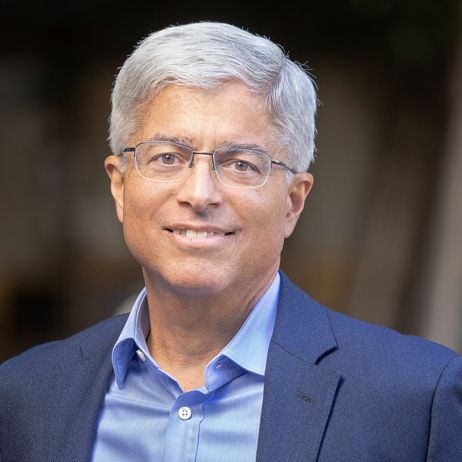
For that reason, the biographical portrait linked here is sourced directly from Edison International’s official corporate profile; the page does not present an unrelated historical or political figure as Pizarro. The surrounding electric-grid photos show real infrastructure rather than pretending to depict a specific person. This makes the article’s visuals useful without sacrificing accuracy.
Five evidence-based lessons from two long executive careers
1. Technical education can connect to business leadership in different ways. Pizarro’s chemistry training and Quincey’s electronic-engineering degree are documented. Their later work illustrates that technical training need not lead exclusively to laboratory or engineering design careers. It can become part of a broader base of analytical experience combined with organizational responsibility.
2. Long internal careers provide operational context. Both joined their companies in the 1990s and rose through successive roles over many years. That sequence can help an executive understand multiple parts of an organization. But longevity does not remove the need to evaluate actual outcomes and risks; it is a biographical pattern, not an automatic quality score.
3. Strategy and execution are connected but distinct. Their consulting backgrounds can be documented, yet running a utility or international beverage company requires doing far more than writing strategic recommendations. Staff, customers, facilities, supply chains, regulators and partners experience the consequences of executive decisions in the real world.
4. Industry conditions shape what success looks like. Edison faces infrastructure, reliability and wildfire challenges in a heavily regulated environment. Coca-Cola must manage a broad consumer portfolio and a global distribution system. The same general leadership terms—innovation, resilience, growth—can refer to very different projects in those contexts.
5. Dates are essential in business biographies. Quincey’s transition to Executive Chairman in March 2026 is a good example. An article can remain factually coherent only if it updates roles and cites the relevant period. Pizarro’s leadership record likewise needs to distinguish longstanding priorities from specific 2026 findings concerning the Eaton Fire and the company’s regulatory environment.
Pedro Pizarro and James Quincey: FAQ
Are Pedro Pizarro and James Quincey related?
No verified family relationship appears in the official biographies and sources reviewed. Their shared professional-event listing is not evidence of kinship.
What is the real connection between Pedro Pizarro and James Quincey?
Yale’s September 17, 2025 CEO Caucus program lists both men as opening-remarks participants in the same executive discussion segment on trade, AI and technology.
Did they work together at the same company?
No shared employer is established by their published career histories. Pizarro worked at McKinsey and Edison; Quincey worked at Kalchas and Coca-Cola.
Is James Quincey still Coca-Cola’s CEO in 2026?
No. He transitioned to Executive Chairman on March 31, 2026, when Henrique Braun became chief executive officer.
Who is the CEO of Edison International in 2026?
Pedro J. Pizarro is listed as the company’s President and Chief Executive Officer on its current leadership site.
Where did Pedro Pizarro go to college?
He earned an undergraduate chemistry degree at Harvard University and a chemistry PhD from the California Institute of Technology.
What did James Quincey study?
He earned a bachelor’s degree in electronic engineering at the University of Liverpool.
How much did Pedro Pizarro earn in 2025?
Edison International’s 2026 proxy reported $16,544,559 in total compensation for fiscal 2025, not solely salary.
How much did James Quincey earn in 2025?
Coca-Cola’s 2026 proxy reported $31,208,165 in 2025 total compensation, including salary, equity-related awards and other components.
What is Pedro Pizarro’s exact net worth?
An independently confirmed 2026 personal net-worth figure is not established by the reviewed public records. Executive pay is not the same as personal wealth.
What is James Quincey’s net worth?
Third-party sites publish estimates, but those are not audited personal financial statements. The exact figure cannot be verified from his public corporate biography or compensation table.
Were both executives at the Yale CEO Caucus?
Yes. They are both listed in the September 17, 2025 program. The agenda does not prove they held a private discussion together.
Does Pedro Pizarro also serve on the 3M board?
Yes. Edison International’s official board profile lists him as a director of 3M.
Does James Quincey serve on Pfizer’s board?
Yes. Coca-Cola’s official profile lists a Pfizer directorship.
What did investigators conclude about the Eaton Fire?
In August 2026, Los Angeles County announced that an investigation with CAL FIRE determined electrical arcing at an out-of-service Southern California Edison transmission tower caused the January 2025 fire. Separate legal proceedings address liability issues.
Is Pedro J. Pizarro the same person as the historical Pedro Pizarro?
No. This article concerns the modern Edison International executive, not the sixteenth-century historical figure or other people with similar names.
The real story behind Pedro Pizarro and James Quincey
Pedro Pizarro and James Quincey belong to different industries, but their biographies share several identifiable themes. Both began with technical education, gained consulting experience and spent many years inside the companies they would eventually lead. The most direct documented overlap is their listing in the same September 2025 Yale CEO Caucus session. That is an important, verifiable detail, but it does not support claims of a private partnership or family connection.
As of October 2026, Pizarro remains President and CEO of Edison International, managing a utility parent company at a time of significant grid-investment and wildfire-related challenges. Quincey now serves as Executive Chairman of Coca-Cola following a March 2026 succession that brought Henrique Braun into the CEO role. The official disclosures and event agenda tell a stronger story than unsourced net-worth numbers or vague claims that the two executives are secretly connected.
Readers looking for a direct answer can remember three things: the Yale forum is documented, their companies are separate, and their current leadership titles differ. Readers researching the biographies can use the linked company pages, the public CEO Caucus program, and shareholder disclosures to check the facts and revisit them when roles or events change.
Primary sources and verification
Information is current to October 28, 2026. Company biographies establish roles and professional history; shareholder documents supply compensation figures; the university program identifies the shared forum; and a county government release documents the fire-investigation finding. Each source is linked for independent checking.
- Edison International — Pedro J. Pizarro official biography
- Edison International — director biography and education
- Coca-Cola — James Quincey official board biography
- Coca-Cola — CEO succession and Executive Chairman transition
- Coca-Cola — Henrique Braun CEO biography
- Yale School of Management — September 17, 2025 CEO Caucus agenda
- Edison International — 2026 proxy statements
- Coca-Cola — 2026 proxy, 2025 compensation table
- Los Angeles County — August 4, 2026 Eaton Fire findings
- Smart Electric Power Alliance — 2026 leadership award